Posts

Converting Our Home to 100% Renewable Energy

Image
For several years, Judy and I have talked about switching our home heating system from natural gas to electricity generated by renewable energy.   We replaced our old gas water heater with an electric one almost four years ago.   in 2023, we looked into replacing our old gas furnace with an electric heat pump.   We had had our gas furnace since 1999 and worried that it would die sooner or later on a cold winter day.   Without getting into a detailed physics lesson, heat pumps work by pulling heat from cold outdoor air and transferring it indoors.   But during warm weather, the heat pump pulls heat from indoor air and transfers it to the outdoors. Heat pumps are more expensive than gas furnaces, but large federal rebates (up to $8000) were promised by the Biden administration which would have eased the pain to our wallets if we purchased one.   However, the promised federal rebate program never seemed to get going.   After last year’s election, we...

One Small Step for Renewable Energy

Image
The short story I wrote in January 2022 about our new electric water heater was posted on the Wandering Geographer blog before I created a new Climate Crisis blog.  Here is the link to that post which is a sort of prequel to my latest post about our new heat pump system:  https://wanderinggeographer.blogspot.com/2022/01/one-small-step-for-renewable-energy.html

The Earth Needs Your Vote!

Image
Up until now, I’ve avoiding injecting politics into my posts about the Climate Crisis.   However, getting involved in politics could be the most important thing an individual can do about the climate crisis.   Now, I’ll be the first to admit that politics has increasingly become an unpleasant activity involving a number of unpleasant and divisive people.   I don’t blame you for wanting to steer clear of the mess and limit yourself to passively watching the nasty business unfold on the nightly news.                                 Source:  huffingtonpost.com But here’s the catch:   we have a big election coming up in a year and the Climate Crisis is going to be a central issue in the campaign.   Purveyors of disinformation in the press, the political arena, and social media will attempt to discredit candidates who accept the consensus of mainstream scientists reg...

Fighting Climate Disinformation in the Classroom

Image
Denver, Colorado Last night, our neighborhood association held a forum featuring the two candidates for southeast Denver for the school board.   Since I’m the association president (I was “drafted” – no one else wanted the job), I had to go to the meeting anyway.   My partner, Judy, didn’t want to go.   “I don’t have kids, so why should I care who is on the school board?” she reasoned.   I understand that line of thinking and until recently I figured that school boards were an issue for parents and grandparents of school age children to worry about but not me. Lately, I’ve changed my mind after learning that people with extremist political, social, and religious views have been getting elected to school boards around the country.   They and their supporters’ objective is to control what is being taught in schools making sure that it conforms to their ideologies.   They hope to shape the thinking of school kids on a variety of issues with troubling impli...

What about Gasoline-Powered Lawn Equipment?

Image
In my last post, I took on the unquestioned acceptance of green-grass lawns as the ideal for urban and suburban America.   I advocated replacing lawns with native plants and pointed out the latter’s advantages for fighting climate change and promoting biodiversity.   But what if you’re not quite ready to tear out your traditional lawn?  There are some things you can do to reduce the associated hydrocarbon emissions associated with lawn maintenance.  Specifically, you can get rid of your power equipment that uses two-stroke engines which run on a mixture of gasoline and oil.  These include lawn mowers, leaf blowers, chain saws, and hedge trimmers.  Electric alternatives are now available which have power equal to that of the old two-stroke engines.  John Deere has even introduced an electric riding mower. My electric chain saw and hedge trimmer have power cords which require me to drag around a 50-foot extension cord to run them.  You can now g...

An alternative to green lawns that helps both climate and critters

Image
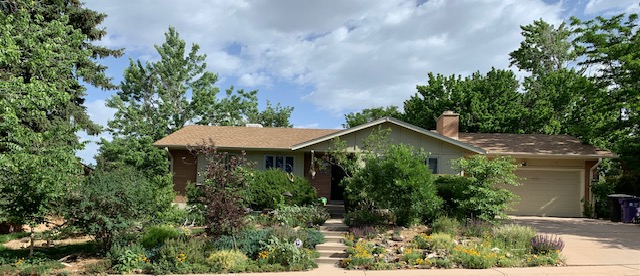
Denver, Colorado Why do we have green lawns?   Habit, I suppose as well as perceived peer pressure from neighbors.   And yet, some 20 years ago when my partner, Judy, tore out part of our front lawn replacing it with xeriscape (drought-tolerant) plants, a local garden club gave her an award.   Instead of criticism, some neighbors have been inspired to take their lawns in several different directions, replacing grass with native plants, shrubs, trees, flower beds, and rock gardens. Thanks to Judy’s efforts, our front yard in southeast Denver is dominated by drought-tolerant plants and trees.  Fortunately, there are no neighborhood covenants that stopped us from tearing out our mostly crab-grass lawn more than 20 years ago.   Photo by Judy Greenfield In relatively dry Denver, the recommended approach 20 years ago was xeriscaping.  But rather than drought-tolerant plants in general, plants native to a local area are now preferred for natural landscaping...

Why not sustainable housing?

Image
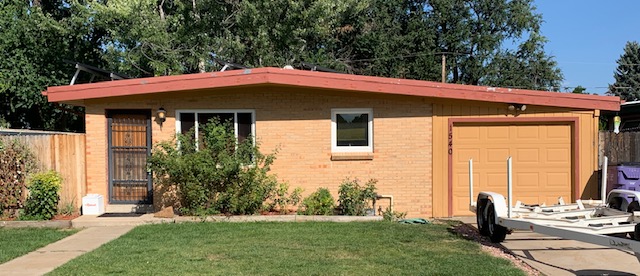
Denver, Colorado In my blog post last week, I railed against real estate developers who build unnecessarily large homes and the people who buy them.   One anonymous reader submitted a comment asking about developments to accommodate people who need more modest housing?   He/she wondered if I see a place for real estate development at all, and if so, how can it be done sustainably?   I am forced to admit that as long as the population keeps growing especially in metropolitan areas which are perceived to be highly desirable places to live with a healthy job market, new real estate developments will be necessary.  But why can’t we have new developments that provide homes the middle class can afford; meet their needs in terms of size, proximity to work, and basic amenities; and also be “climate-friendly”?   They don’t built them like they used to:  A 1950s “starter home” in southeast Denver.  It’s probably only 800-1000 square feet in size which is p...